
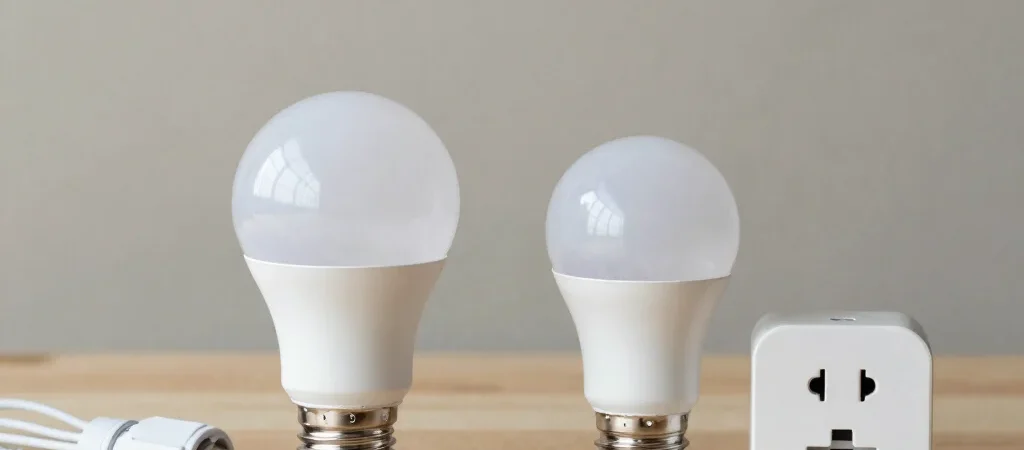
You want one floor lamp to follow a schedule, but the product aisle offers two different routes: change the bulb or add a smart plug. They are not interchangeable upgrades, and the right choice depends on what you need the lamp to do. This is a feature-and-compatibility comparison, not a report of product testing; some links may earn us a commission.
What each option controls
A smart bulb replaces the lamp’s bulb and may provide lighting controls such as dimming or color settings, depending on the specific model. A smart plug sits between the lamp’s power cord and the outlet, so it controls power to the lamp rather than changing the bulb’s lighting features. Check the product details carefully: a plug cannot add bulb-level color settings, and a bulb needs a compatible fixture and fitting.
The case for each choice
A smart bulb is worth comparing when you want controls that apply to the light itself and are willing to use the bulb’s supported app or system. Its trade-off is compatibility: the bulb fitting, fixture, and any stated connectivity requirements all need to work together. A smart plug may be a simpler fit for a lamp you want to switch on or off remotely, but it won’t make a non-dimmable bulb dimmable.
Check before checkout
First decide whether you need light adjustment or only scheduled power control. Then check the lamp’s switch position, the bulb’s fitting and stated requirements, and whether the product works with the control system you already use. If the lamp is often switched off at its own switch, consider how that habit will affect connected control. Comparing those practical details is more useful than choosing by the word “smart” alone.