
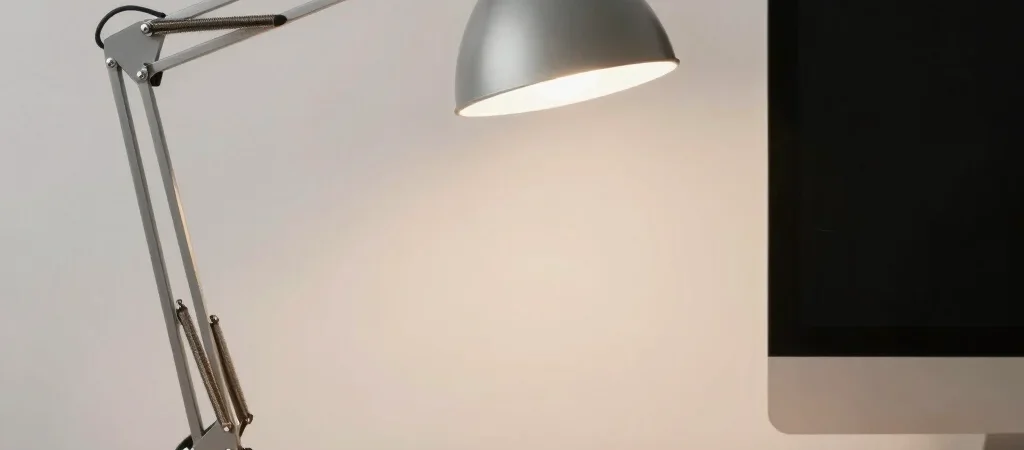
You sit down to read a printed page, then turn to a screen—and the desk lamp that seemed bright enough now reflects in the display. Choosing a work light is less about chasing a feature list than matching the lamp’s movement, light direction, and controls to your desk. This guide focuses on those buying criteria, not hands-on testing of particular models; some links may earn us a commission.
Check reach and adjustability
Measure the space between the lamp’s base and the area you need to light, especially if a monitor takes up the back of the desk. An adjustable arm can make it easier to move light onto a notebook and away from a screen, but it needs enough clearance to reposition without hitting shelves or monitors. A fixed lamp may suit a compact desk where the work area rarely changes.
Look beyond brightness
Check whether the lamp lets you direct light toward paper without shining straight into your eyes or reflecting off the screen. If a listing offers brightness or color settings, consider whether the controls are easy to reach and whether the settings can be changed on the lamp itself. More options can be helpful, but they add little if the controls are inconvenient in your normal work routine.
Weigh the useful trade-offs
A clamp base can preserve desk space, though it requires an edge that can accommodate the clamp and may limit where the lamp can go. A weighted base is easier to place on many surfaces but occupies part of the desk. Before buying, compare dimensions, power connection, return terms, and the placement shown in product images; those details can matter more than a long list of secondary features.